
Book a Call
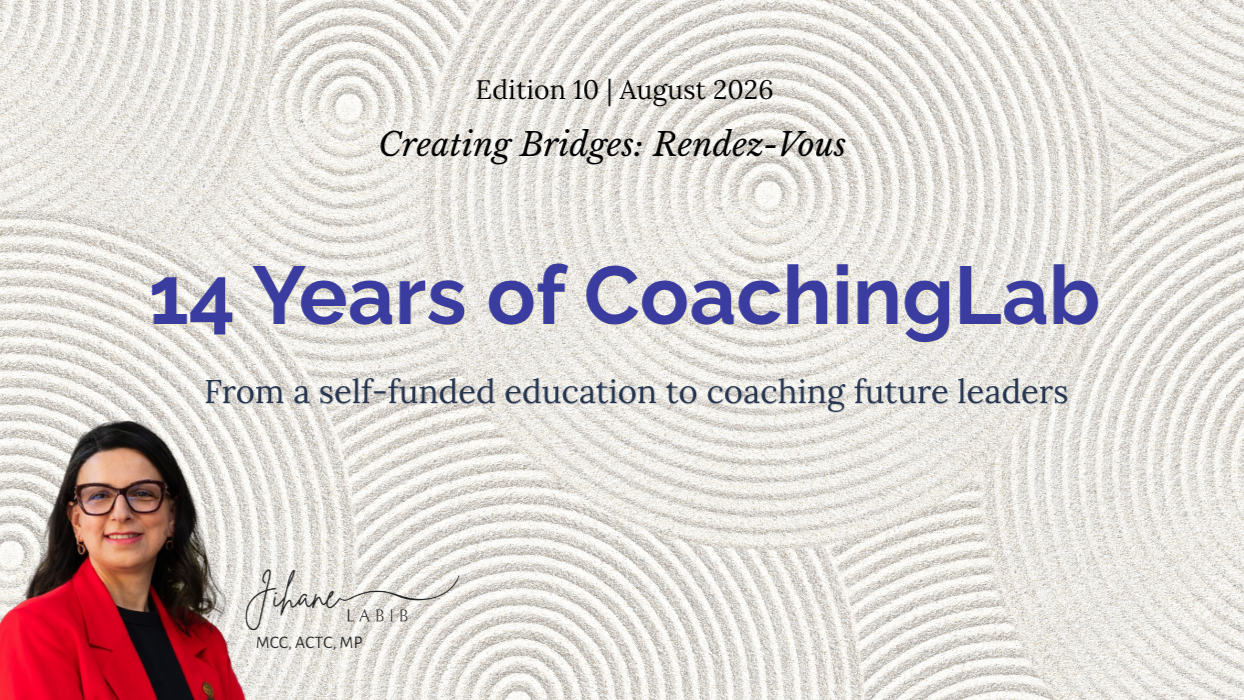
In 2008, HR rejected me saying coaching programs were reserved for directors and senior executives when I asked them about a coaching certification. I had not reached that level then.
So I paid for it myself - Tuition, books and travel.
I used my vacation days to for studying, attending conferences and building relationships with mentors, all while holding a full executive career across telecom, media, and pharma.
People told me I was wasting my money on strange things. But I knew why I was doing it because I wanted to be properly trained long before I ever called myself a coach.
What I did not know then was where that conviction would lead me to where I am today.
Seeing what was missing
Nearly 6 years of learning and practising my corporate career, I started coaching executives privately and informally, and then gradually through structured sessions.
As I began coaching more widely across the region, I noticed how even if helpful for people, coaching had been treated as a Western luxury and widely misunderstood.
Every end of the session I would have with executives, this one question kept returning to me.
What would a coaching academy look like if it were genuinely rooted in regional realities, while holding to the highest international standards?
Initially, it was very much tied to my own practice, coaching executives, leaders and teams, and helping organisations work through leadership and transformation issues. Then something naturally started to happen. Clients did not want individual coaching alone. Organisations wanted their managers to develop coaching skills, and individuals I encountered wanted to learn how to become professional coaches themselves. This is how Coachinglab slowly turned into an academy.
Building something from the ground up
Replicating a programme that already existed, or franchising one, held no interest for me. I wanted to build something that understand the cultures with complex family businesses model and multilingual team that could yet travel beyond one geography.
I worked and designed every module to hold ICF standards alongside the needs of people and firms : hierarchical model, family businesses, multilingual teams, questions of power, identity and wellbeing.
After spending two years designing the programme, we finally submitted it to the International Coaching Federation for accreditation. Every day I would check my mail wondering “Would a local programme, designed by an Arab-African woman be seen as enough?”
After months of waiting, I finally received a response in mail saying , “Congratulations on becoming the first coaching certification programme in Francophone Africa to receive this global recognition!”
From a regional vision to an international journey
What had begun as my personal conviction was now internationally recognised.
Soon, enquiries began arriving from Morocco, Tunisia, Côte d’Ivoire, Senegal, France, Canada and the Middle East — from people looking not simply for a certification, but for a programme that spoke to their cultural and business context.
A regional vision was quietly becoming an international one, and CoachingLab Academy was
Fourteen years on, it lives through people
Today Coachinglab brings together coaches and leaders from different cultures, industries and stages of experience. There is no single profile in the room. CEOs sit alongside HR professionals, consultants, teachers and doctors, some with decades of leadership behind them, others just starting out as coaches. They come from banking, healthcare, telecom, education and consulting, across different countries and cultures.
That diversity is the point. An educator gives an executive a new lens on leadership. A new coach's simple question makes a teacher stop and think.
This is what Creating Bridges is about: people learning from one another across cultures, generations and professions.
Over the years, we built ICF-accredited Level 1 and Level 2 programmes, and a community around them. What I treasure most is that CoachingLab has evolved beyond me. Participants have gone on to become Mentors, Coaches, Facilitators and Partners within it. I don't just see a business when I look back. I see a community that has been learning and growing together for over ten years.
The real measure of these years isn't where the academy has reached. It's what people carry out of it, and not always in the big success stories. What catches my eye is the learning that keeps going after the programme ends. Some came in wanting to be better leaders and left deciding to become coaches. Others came for certification and found something more personal in how they listen and relate to people.
Dr. Mohammed Elmeski called his Coachinglab experience a "véritable tournant," a real turning point. Dr. Majda Sebbani, coming from medicine and mental-health coaching, valued the rigour of the process. And sometimes, years later, someone tells me, "Jihane, I still use what you taught me," or I see a former participant mentoring another coach. That's when an anniversary means something.
Here's what one of our students shared:
"It is deeply practical, human-centered, and focused on self-awareness and personal transformation. This experience has had a real impact on me both professionally and personally."
Huda Benedetek, HR Director, 2022 to 2023 Cohort
We called it a lab deliberately, because Coachinglab is a place to experiment and to find out what becomes possible when the science of coaching meets the art of transformation for leaders.
Book your seat for the upcoming Cohort today! [Join us here with cohort 19 ]
Jihane Labib is an executive coach, MCC, ACTC, MCS by ICF & MP by EMCC, She is ICF PC Global Board Chair, and author of Creating Bridges: Leading Growth Across Cultures and Generations.
