
Book a Call
Values Matter More than KPIs
Cross-cultural teams don't break down over different work styles, they break down over unspoken differences in what people actually value. This article unpacks value-aligned leadership, a shift from role-based identity to purpose-driven identity, and lays out the concrete practice of naming values, translating them into behavior, and embedding them into daily systems so trust holds across distance and difference.

Growing up in Marrakech, I lived in a vibrant community where people from different backgrounds and traditions coexisted. As a child, I was fascinated by observing how people communicated, built trust, and made sense of the world around them despite their differences.

This is something that I still see today as a coach with senior leaders that work across connected teams worldwide. The greatest challenge to leadership in today's world is to align people who think, work, and communicate differently. With an increasingly cross-cultural team, leaders are expected to be able to cross cultures and remain clear, trusted and directed.
That's one of the reasons why I do this work and why I care deeply about value-aligned leadership.
Value-Aligned Leadership and the Return to Purpose
Value-aligned leadership moves away from performance and towards the motivation and purpose for every person's actions, duties and roles. It invites leaders to ask themselves why they do what they do, and whether that 'why' supports the values and mission of the organization.
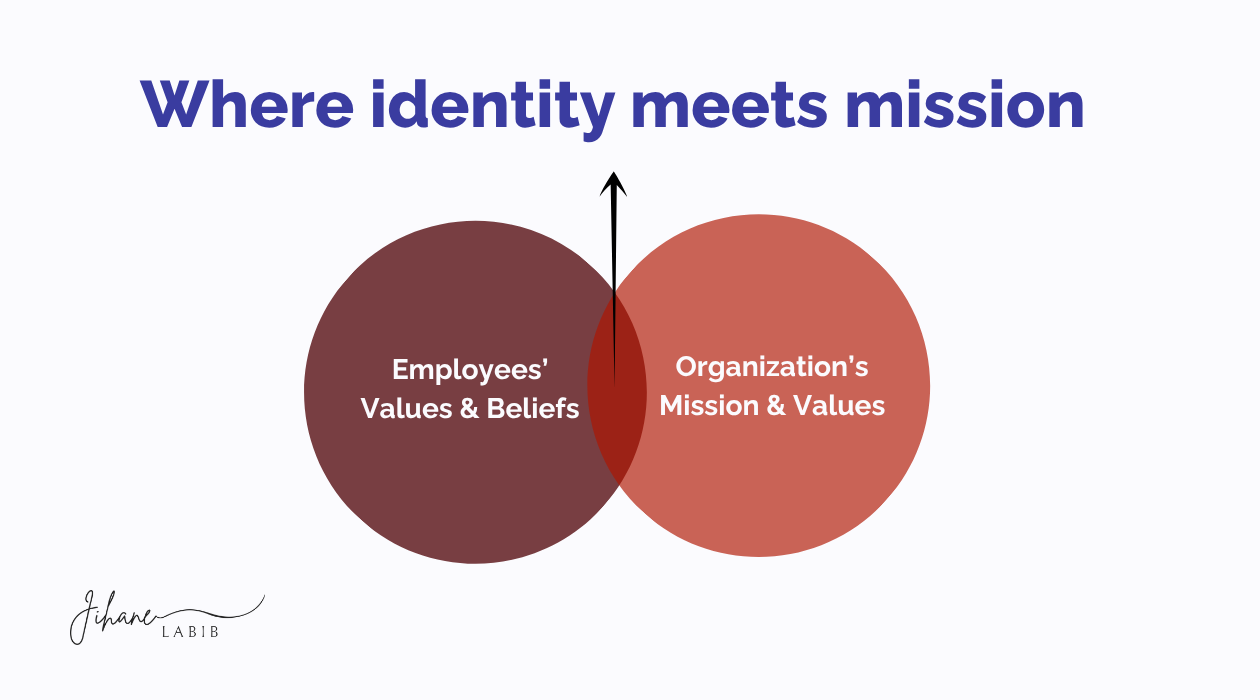
This framework asks you to invest in your people's identity and connect it to their performance.
The shift moves from a role-based identity, "I am a VP of Finance; I oversee budgets, reporting, and financial controls," to a meaning-based identity : "I help organizations turn limited resources into durable strategic advantage."
That VP of Finance is now operating from a value of stewardship and the difference is significant.
How Value-Aligned Leadership Helps Cross-Cultural Leaders
- It instills trust between teams. Leaders who consistently model their values provide a clear and reliable "North Star" for team members of diverse backgrounds. The predictability makes everybody feel good about understanding one another and no misunderstandings about intentions. It reduces suspicion and fosters an open and trustful team climate in various teams.
- It eliminates confusion in actions and choices. Norms for communication, hierarchy, time and feedback, etc. may differ across teams working globally. A leadership team that is aligned with the values consensually clarifies the standard of conduct for the team, how we treat each other, and eliminates ambiguity by making it clear to all team members.
- It makes you know what makes him/her tick. Understanding a teammate's values can guide you on what motivates them, what tripping them up, what scares them, what makes them trust you, etc. It enables you to add value to a task or role, not just give a deliverable.
Building It in Practice
To be value aligned, a leader must know the values and beliefs of their team, and relate what is going on with them to the mission of the organization. Knowing what value-aligned leadership does is one thing, but it's another to embrace it. It's one thing to know what value-aligned leadership is, it's another to embrace it. What do you need to do to get started?
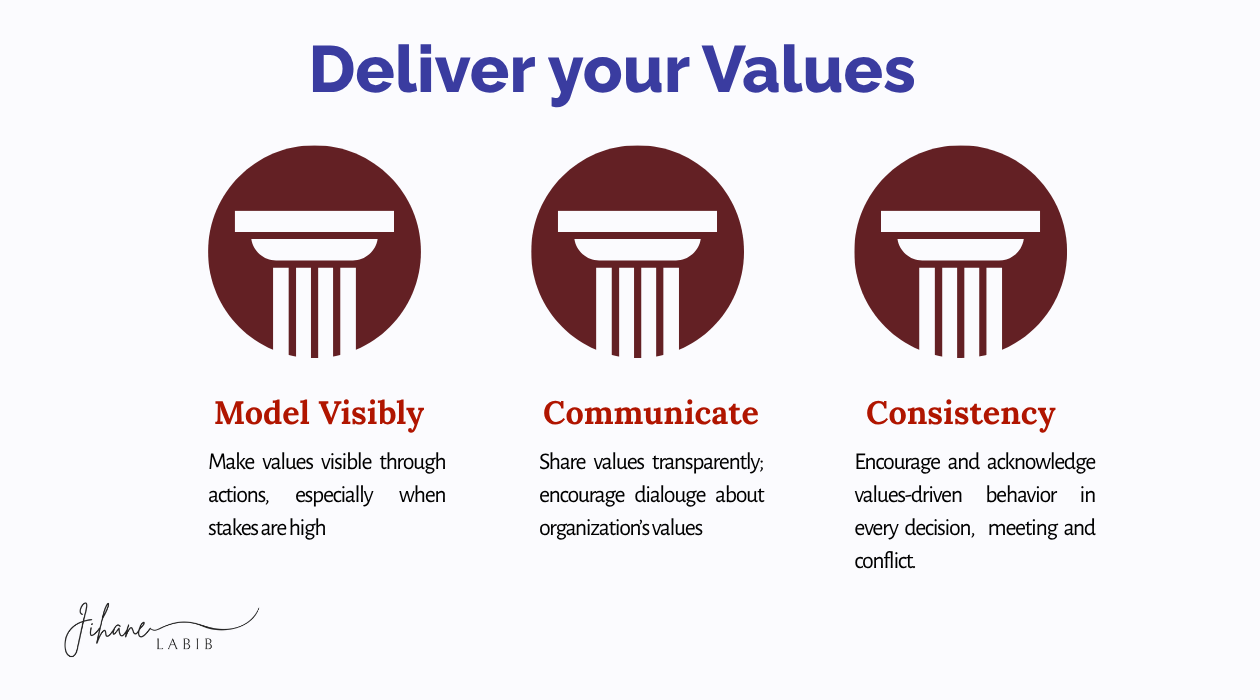
- Express your values first, then state them. Know and define the 3-5 values that define how your team performs and makes decisions when under pressure. Useful first step: try to remember times your team was proud of itself and celebrated as a team, and ask the group what it is about those times that had a significance for the team. That's where the real values lie!
- Translate values into behavior, not language. "Integrity" means little until it's defined in context. What does integrity look like in your team’s decision, a conflict, or a missed target? Specify what makes values actionable rather than aspirational.
- Make alignment a recurring conversation, not an announcement. Values don't hold through a single communication. They hold through visible consistency: in one-on-ones, in how you respond when things go wrong, in who and what you recognize.
- Build values into your systems. Feedback cycles, performance reviews, team rituals: if the structure doesn't reflect the values, the values won't survive the next quarter. Build them in, not just on.
The leaders who sustain trust across diverse teams rarely have the loudest voice. They have the clearest one. I help leaders cultivate clarity and lead from their values and alignment.
I’d love to know what values are truly shaping the way your team communicates, collaborates, and builds trust across those differences?
If this is something you are currently navigating within your leadership or team dynamics, feel free to explore my book, Creating Bridges, where I share reflections on leadership, culture, and building alignment across differences.
Jihane Labib is an executive coach, MCC, ACTC by ICF & MP by EMCC, She is ICF Global Board leader, and author of Creating Bridges: Leading Growth Across Cultures and Generations.
