
Book a Call
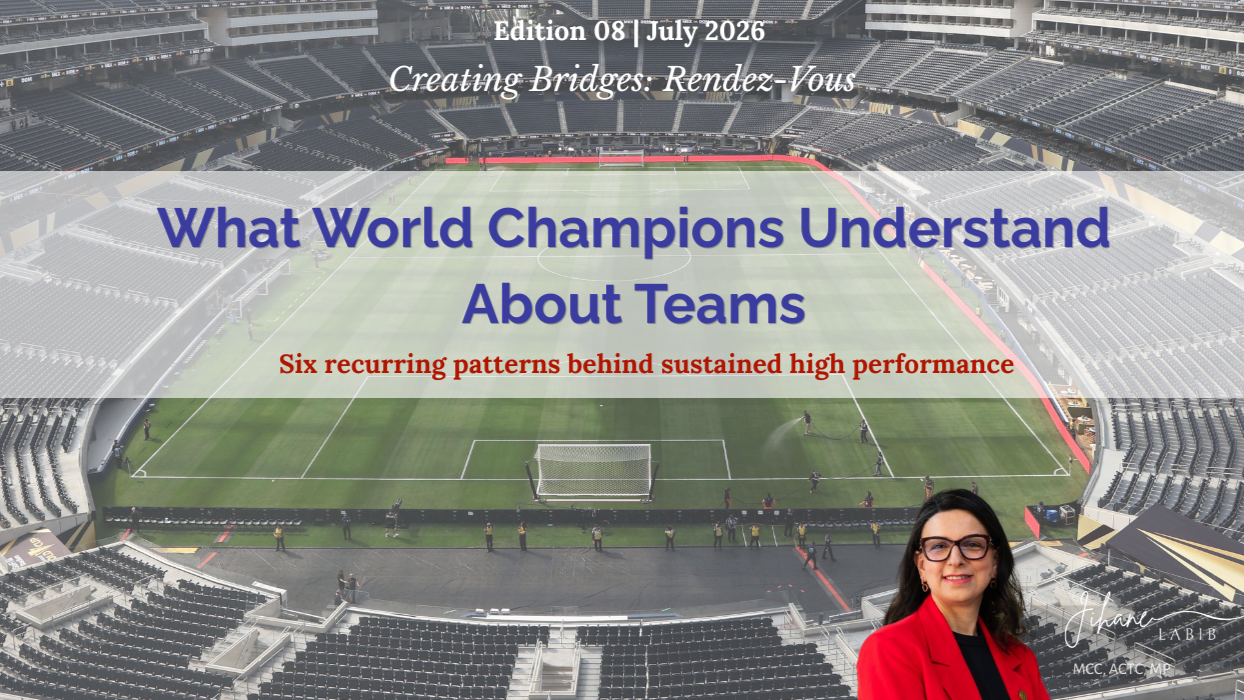
Every World Cup ends with the same image. A captain lifts the trophy, confetti, and one team celebrates while another sits with what might have been. It is a beautiful photograph, and it is a slightly misleading one, because trophies are lifted by individuals but they are almost never won by them.
Watching the celebrations, I found myself thinking less about the final and more about the road that led there. When I look back at the last four champions - Spain (2026), Argentina (2022), France (2018) and Germany (2014), I see more than mere winning-finalist teams.

On the surface they could not have been more different.
- Spain controlled possession and wore opponents down with patience
- Argentina evolved through the tournament while staying emotionally united
- Germany paired discipline with flexibility
- France adapted to the opponent rather than dominating the ball
Different managers, different generations, different football philosophies. Yet the foundations underneath are the same.
The first is clarity. Every champion knew who they were long before they knew how they wanted to play. Their game plans shifted from match to match, but their identity held. The same is true in organizations. Markets move, customers move, technology moves, and the identity of the leader and the enterprise is the anchor that should not.
The second is distributed leadership. Every team had a captain, and in every team leadership extended far past the armband. Senior voices set standards, steadied the group in decisive moments, and stepped forward at different times. The strongest organizations do not manufacture one influential figure. They build environments where leadership emerges naturally across the whole.
The third is role acceptance, and it may be the most underrated quality of all. Every squad held world-class talent, yet success rarely came from everyone reaching to be the hero. Some controlled the tempo, some protected the defense, some ran relentlessly to make space for others. The common thread was not individual brilliance, it was talent aligned behind a shared objective.
If this is the work you are ready to do with your own team, to move from gathered talent toward a genuinely aligned group, book a free discovery call today. My calendar has only 7 slots for this month : )
The fourth is adaptability. None of these teams won by repeating the same formula every match. Their methods evolved while their principles stayed intact. Organizations often confuse consistency with repetition. Champions suggest something different, that consistency is protecting your principles while adapting your methods.
The fifth was resilience. Every champion met adversity, an opening loss, years of near misses, a period of rebuilding, an early upset. None of them abandoned who they were. They trusted the team they had built.

As leaders we spend enormous amounts of energy asking how to find better talent for our teams.
But the World Cup gives you a different question.
“What kind of environment are you building for the talent you already have?”
Because every four years the world celebrates the player lifting the trophy, and the trophy is only the closing chapter of a story that began years earlier.
The real victory happens long before the final whistle, when a group of individuals developed a shared identity, trusted one another, accepted their roles, adapted together, and committed to something larger than themselves.
That is true in football. It is just as true in leadership. And it is the kind of team every leader should want to build.
Jihane Labib is an executive coach, MCC, ACTC by ICF & MP by EMCC, She is ICF PC Global Board Chair, and author of Creating Bridges: Leading Growth Across Cultures and Generations.
